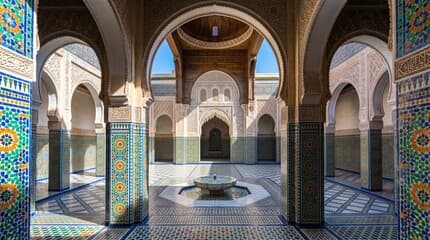

The History of Zellige: A Thousand-Year Legacy
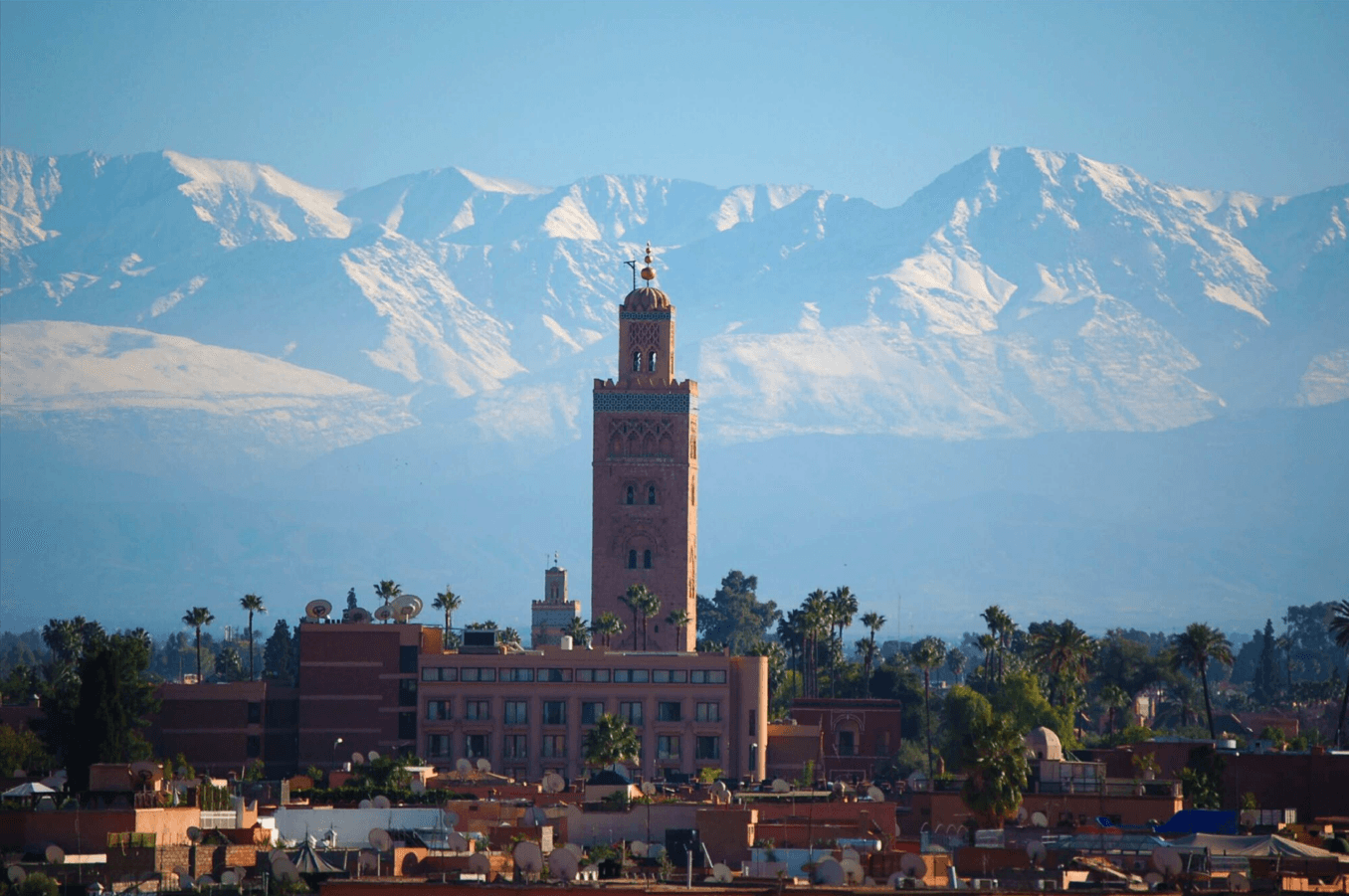
Born in 10th-century Morocco, zellige is an ancestral art passed down through generations by master craftsmen known as maâlems.
Developed and perfected across dynasties, notably under the Almoravids and Merinids, it became one of the most iconic symbols of Moroccan architecture. It can be found in royal palaces, traditional riads, and grand mosques, where it embodies refinement, precision, and spirituality.
Every zellige pattern is built on complex geometric constructions, inspired by mathematics and infinity. These compositions are not merely decorative: they express a worldview in which harmony and balance hold a central place.
An entirely handmade craft
Unlike modern industrial materials, zellige is entirely shaped by hand.
Each tile is:
- molded from natural clay
- dried in the sun
- fired in a traditional kiln
- hand-cut with remarkable precision
This meticulous work gives birth to one-of-a-kind pieces.
The slight irregularities, color variations, and texture differences are not flaws — they are the very signature of Moroccan craftsmanship.
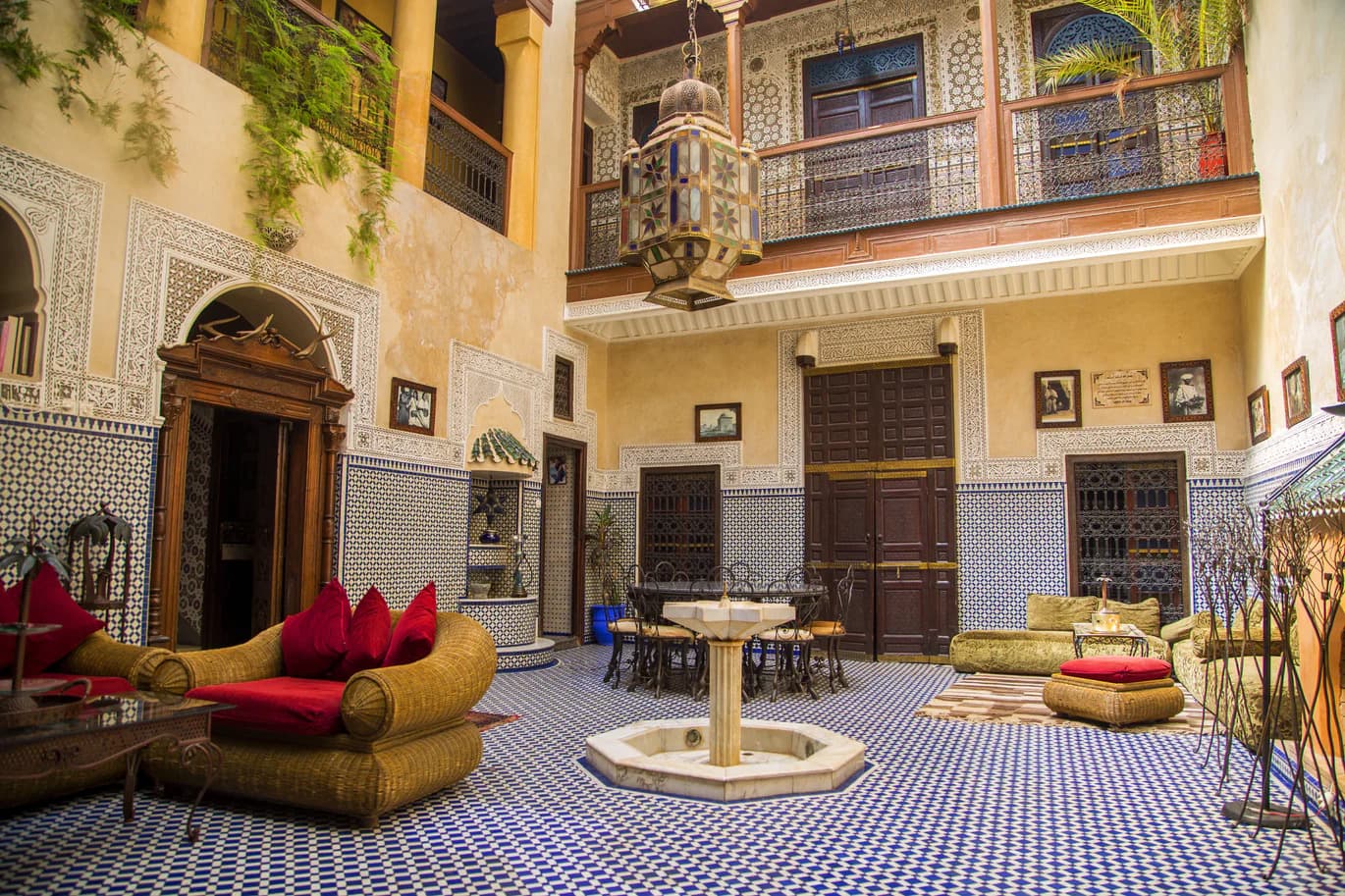
A living, luminous material
Zellige has a rare quality: it interacts with light.
Depending on the angle of the sun or lighting, the tiles reveal subtle, shifting reflections that bring the surfaces to life.
The result: every table becomes a living piece that evolves throughout the day.
A tradition that transcends time
Today, zellige has moved beyond Morocco's borders to find its place in contemporary interiors around the world.
Paired with wrought iron or modern structures, it creates a striking contrast between tradition and contemporary design.
Choosing a zellige piece isn't just buying a piece of furniture: it's bringing home a fragment of history, culture, and living art.